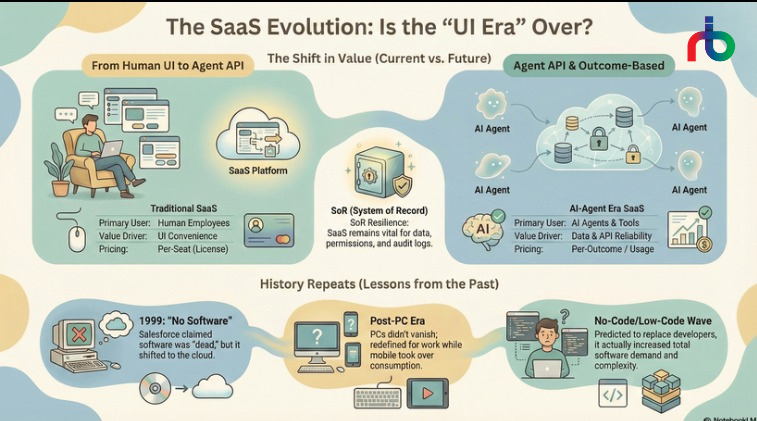
Artificial Intelligence is evolving beyond chatbots and text generation. The next wave of innovation is autonomous AI agents — systems that analyze data, make decisions, and execute actions independently.
OpenClaw is built to power this transformation.
In this blog, we explore how OpenClaw enables agent-based automation, connects AI reasoning with real-world execution, and supports scalable AI infrastructure.
From Chatbots to Autonomous AI Agents
Traditional AI responds to prompts. Modern businesses need AI that can act, not just answer.
Autonomous AI agents can:
-
Process structured inputs
-
Understand context
-
Make intelligent decisions
-
Trigger APIs and workflows
-
Interact with external tools
-
Return structured outputs
OpenClaw provides the agent framework that enables this shift from passive AI systems to active, decision-driven automation.
What is OpenClaw?
OpenClaw is an agent-oriented AI automation framework designed to bridge:
-
AI models (reasoning engines)
-
APIs and external tools
-
Databases and storage systems
-
Workflow orchestration layers
Instead of rigid, rule-based automation, OpenClaw enables dynamic decision-making powered by AI agents, making systems more adaptive and scalable.
Core Architecture of OpenClaw
An OpenClaw-powered system typically includes:
-
Event Intake Layer – Handles API calls and webhooks
-
Agent Logic Engine – Executes AI reasoning and rule-based logic
-
Context & State Management – Maintains session memory
-
Execution Layer – Triggers APIs, databases, or workflows
-
Response Standardization – Returns structured outputs
This layered architecture ensures scalable AI systems, clean separation of concerns, and microservices compatibility.
Why Agent-Based Infrastructure Matters
As automation grows more complex, traditional workflow systems become inefficient.
Agent infrastructure provides:
-
Faster decision cycles
-
Intelligent task routing
-
Context-aware execution
-
Reduced operational overhead
-
Continuous system optimization
OpenClaw enables enterprise AI automation without rebuilding existing systems.
Practical Use Cases
OpenClaw supports multiple domains, including:
-
IT automation and DevOps pipelines
-
AI-powered customer support
-
Intelligent data processing
-
Backend workflow orchestration
-
Automated compliance monitoring
-
AI-driven API integrations
Any system requiring conditional logic and intelligent execution can benefit from an agent-based framework.
Scalability, Reliability & Security
OpenClaw’s modular architecture allows:
-
Microservices deployment
-
Horizontal scaling
-
Fault isolation
-
Secure token-based authentication
-
Detailed logging and observability
Security features include access control, validation layers, rate limiting, and controlled tool permissions — essential for safe autonomous AI execution.
The Future of Autonomous AI
The AI ecosystem is rapidly shifting toward:
-
Multi-agent systems
-
Persistent memory architectures
-
Tool-integrated AI environments
-
Self-improving AI agents
-
Fully automated backend operations
OpenClaw provides the infrastructure layer for autonomous AI systems — enabling AI that doesn’t just generate output, but executes decisions intelligently.
Final Thoughts
The future of AI lies in intelligent automation and autonomous agents.
OpenClaw connects reasoning with execution — delivering secure, scalable, and adaptive AI infrastructure for modern digital systems.
As organizations adopt AI-driven automation, agent-based frameworks like OpenClaw will become foundational technology for enterprise innovation.